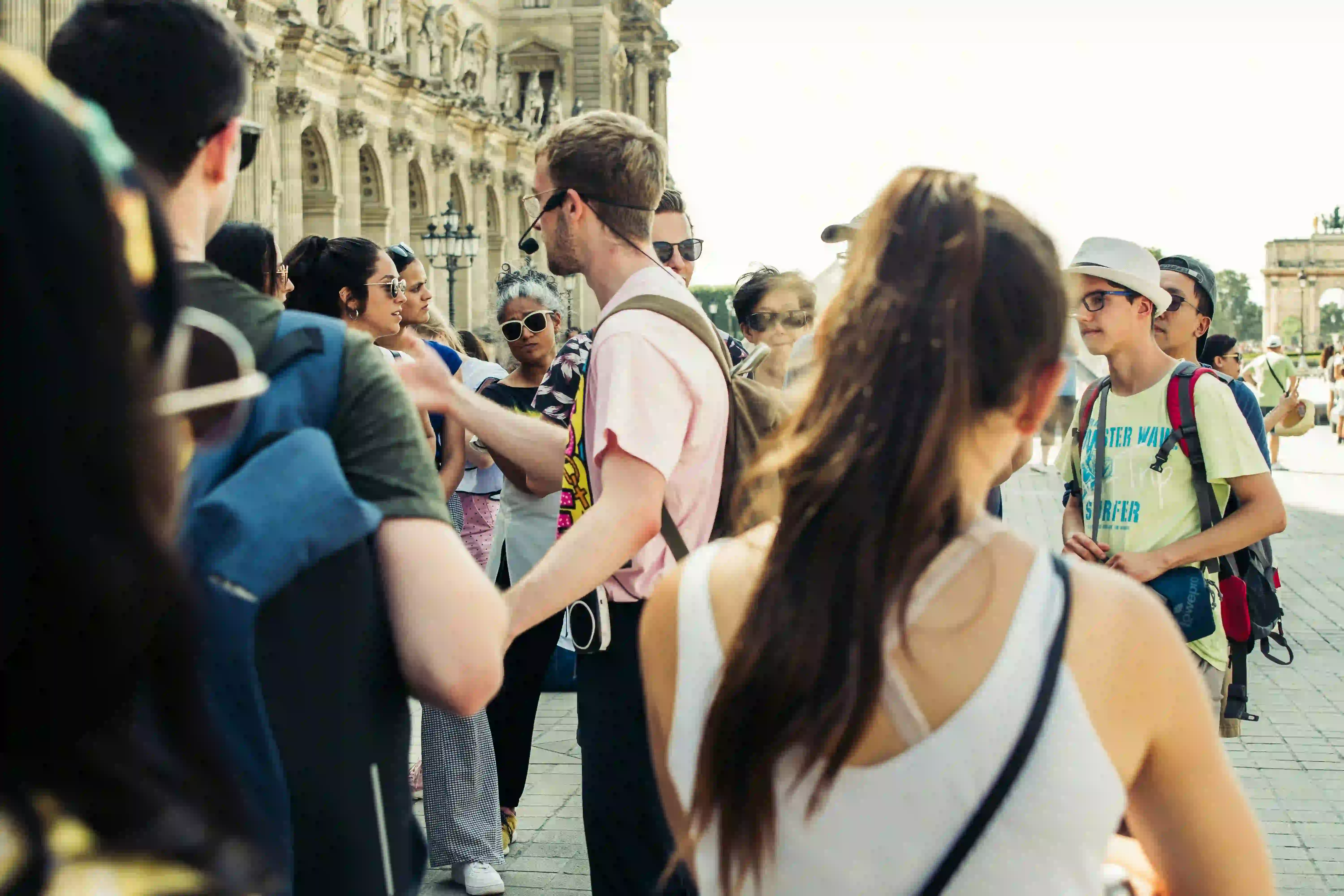
How much do free walking tour guides really earn?
Free tour guides earn no salary — just tips. Top performers make €60–120 per tour. Full breakdown: platform fees, seasons and what changes income most.
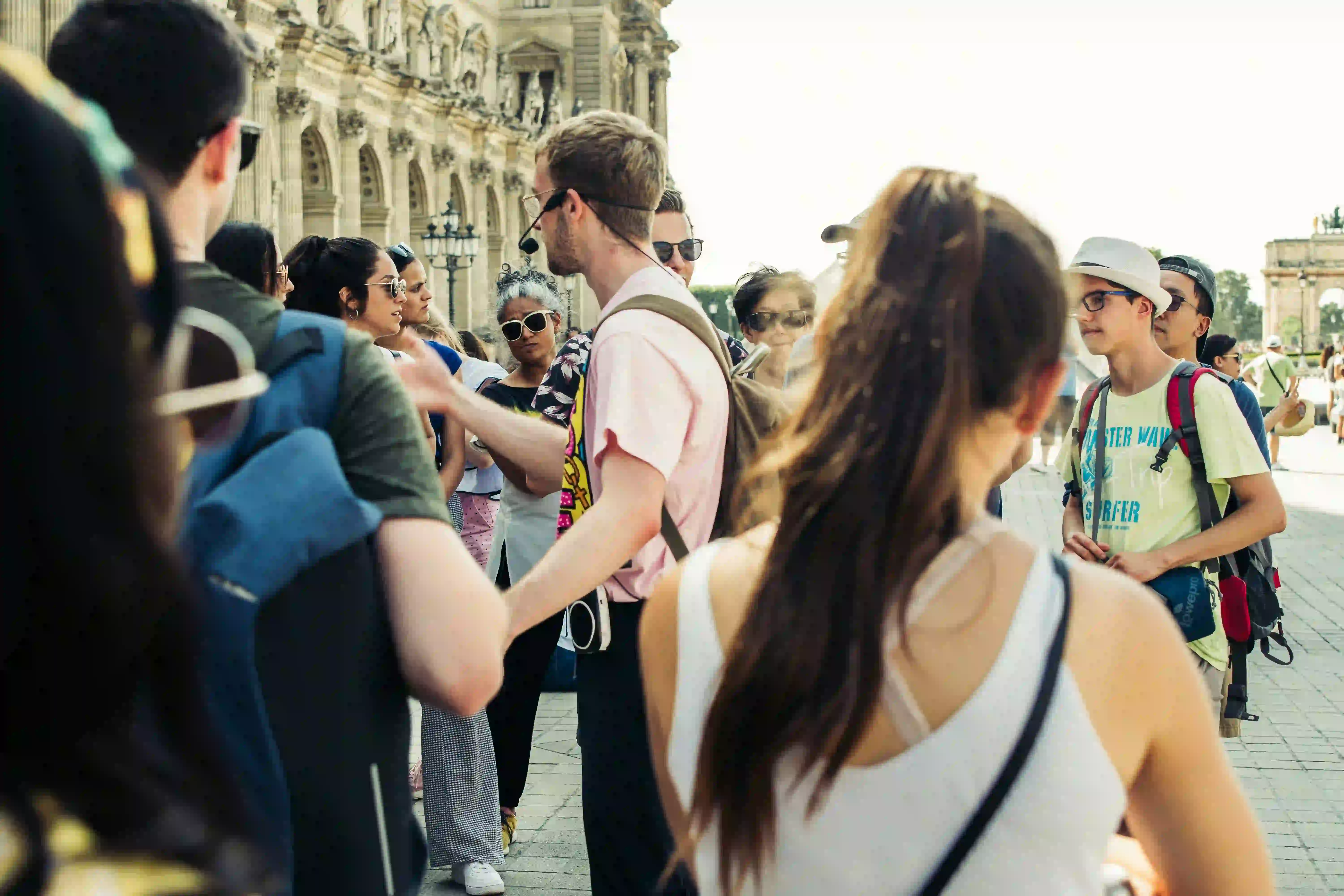
The question comes up on almost every tour I have seen end well. Someone in the group — usually someone who genuinely enjoyed themselves — leans over and whispers: “Wait, this is their actual job? How does that even work?”
It is a fair question. The free tour model is genuinely unusual, and most travellers have no idea whether the guide who just spent two hours walking them through a city’s history is earning a comfortable living or barely scraping by.
The honest answer is: both, depending on the day.
How free tour guides are actually paid
There is no salary. No hourly wage. No employer.
Most free tour guides are self-employed, which means every euro they earn comes directly from the tips guests leave at the end of the tour. There is no backstop, no guaranteed minimum, no paid sick day. Most travellers are genuinely surprised by this — if you have ever wondered how much is normal to leave at the end of a free walking tour, the guide’s entire living depends on those amounts.
Some guides work through platforms or tour companies — Freetour.com, Guruwalk, Get Your Guide, or a local operator. These companies often handle marketing and bookings, which is valuable, especially when a guide is starting out. In exchange, the guide pays the platform a fee, either a flat amount per participant or a percentage of tips.
A few experienced guides work completely independently: they have built their own Google profile, social presence and word-of-mouth network, and they collect tips directly without any middleman. These are usually people who have been at it for several years.
The platform fee reality
This is the detail that surprises most people. Many free tour platforms charge guides a fee per participant — typically €2 to €5 per person — regardless of how much the group tips.
Let that sink in for a moment. If you sign up for a free tour through one of the big platforms and the guide gets charged €3 per head, a group of fifteen people costs the guide €45 before a single tip is given.
On a good day with a generous group, that is easily covered. On a bad day — a cold Tuesday in February with six people who thought the tour was literally free — the guide can finish a two-hour tour with less than they spent to run it.
A tour in numbers
Let us walk through a realistic example for a mid-level guide in a popular European city in spring.
A Thursday afternoon tour, 22 participants booked through a platform. Platform fee: €3 per head, so €66 owed to the platform.
The tour runs two and a half hours. At the end, about 18 of the 22 people tip. The amounts range from €5 to €15. Average tip per person: €9. Total tips: €162.
After the platform fee of €66, the guide earns €96. That is before tax, before any transport costs, and before the time spent preparing and getting to the meeting point. For three hours of total work, it works out to roughly €32 an hour — before tax.
That is actually a decent day. Guides who have good profiles, consistently warm groups and strong closing scripts can average more than that.
Now the same guide in November. 8 participants, platform fee €24. Four people tip, average €7. Total tips €28. After platform fee, the guide earns €4. For three hours of work. That is the other side of the free tour model.
High season versus low season
For most European cities, high season runs roughly from late March to October. Low season is November through February, with some recovery around Christmas in cities with Christmas markets.
The difference in income is not marginal — it is structural. A guide who earns €150 to €250 a day in July might earn €20 to €50 a day in January. Many guides either take a second job in winter, move to a warmer country with year-round tourism, or simply take the winter off and live on savings.
I spoke to a guide in Amsterdam last autumn who told me she does “winter mode” every year: three tours a week maximum, plenty of private bookings for corporate clients, and some work leading school groups. “The street is for summer,” she said. “Winter is when I actually rest and refill.”
What separates a good month from a bad one
Experience guides consistently point to the same factors.
Group size matters, but group composition matters more. A small group that tipped well in the past, came because of reviews, and understood from the start that the tour runs on tips will almost always give more per person than a large group of casual walk-ins.
Reviews drive everything. Guides with 200 positive Google reviews fill their tours even on quiet days. Guides without them rely on passing foot traffic, which is unpredictable.
The closing words decide the day. How a guide ends the tour — the language they use, whether they explain the tips model clearly, whether they make it easy to pay by any method — can double or halve the average contribution. This is not manipulation; it is communication. The specific words, timing and body language that make the difference are covered in detail in how to ask for tips without feeling awkward.
Private bookings are the cushion. Most guides who do this full-time have a mix of public tours and private bookings. Private tours pay a fixed fee up front, which removes the uncertainty of tips entirely. They tend to pay better per hour and serve as financial stability when the public tours have a rough stretch.
Taxes and legal status
Tips are income. In every country, self-employed income — including tips — is taxable, and guides who work regularly in a city are expected to declare it.
The specifics vary by country. In the UK, France, Spain and most of Western Europe, self-employed workers pay income tax on net earnings and may also owe social security contributions. Card payments leave a clear record, which makes them easier to declare. Cash tips technically need to be tracked too, but enforcement is inconsistent.
Guides who earn enough to make a living from tours generally work with an accountant, register a business entity suited to their income level, and plan their taxes quarterly. Those who treat it as a side income often operate in informal grey areas — a risk that increases as income grows. It is also worth noting that guides who accept tips without cash through card payments create a clearer digital record, which tends to make tax declarations more straightforward.
So: do free tour guides earn well? The best ones, in the right cities, in peak season, with strong profiles and sharp communication — yes, genuinely. The average, especially in low season or in a city with heavy competition and low average tips — much less than you would expect for a skilled professional spending hours on their feet every day.
When you tip at the end of a free tour, you are not paying for a service that was already funded somewhere else. You are the entire business model. That is worth remembering, and worth reflecting in the amount you leave.
Frequently asked questions
Do free tour guides earn a good living?
It varies enormously. In a popular city with a well-established profile, a guide who works five days a week in high season can earn as much as a junior office worker. In low season or a less-visited city, income drops sharply.
Do free tour guides pay to work with a company?
Many platforms charge guides a fee per participant, typically 2 to 5 euros per person. This means a guide pays the platform before they earn anything themselves, and a tour with a very small group can result in little or no net income.
How does tipping affect a guide's income?
Tips are everything. For most free tour guides, tips are their entire compensation for a tour. The size, generosity and composition of the group — whether they understood the tips-based model — is what determines whether a guide has a good or a difficult day.
Can free tour guides earn more by working independently?
Yes, in theory. Guides who build their own profile on Google and social media avoid platform fees entirely and keep all tips. The trade-off is that building that visibility takes months or years of consistent work.
Is free tour guiding a full-time job?
For some, yes. Most successful guides in popular tourist cities do two to three tours a day in peak season and supplement their income with private tours, school groups, or corporate bookings during quieter periods.