
Free tour guides: how to handle tourists who don't tip
What to do when guests enjoy your free walking tour and leave without tipping — the psychology, the prevention strategies, and the right mental frame.
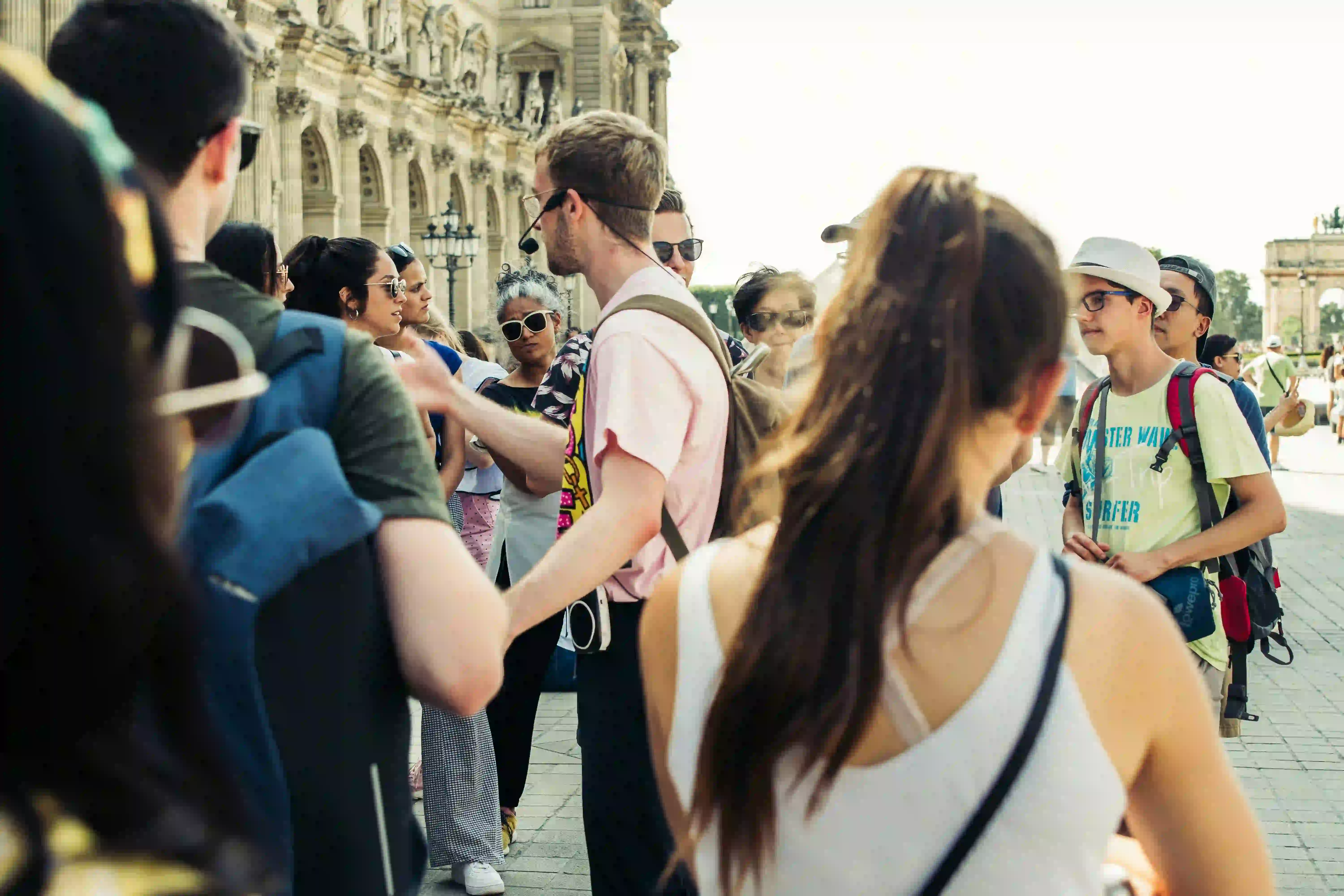
My third tour as a guide, a man stood at the front of the group for two hours, asked more questions than anyone, laughed loudest at every story, shook my hand warmly at the end and said “absolutely brilliant, best tour I’ve done in Europe.” Then he walked away without giving a cent.
I stood there for a moment genuinely baffled. He had been visibly, demonstrably one of the most engaged people I had ever guided. He had got his money’s worth out of the tour in a way that was obvious to everyone around him. And he just left.
That evening I told a more experienced guide what had happened. She did not look remotely surprised. “Oh, that guy,” she said, as though she had met him too. “He’s on every tour.”
She was right. He was. I started recognizing variations of him over the following months: the enthusiast who treats the free tour as a free tour in the most literal sense possible, the person who conflates “I don’t have to tip” with “tipping is not expected,” the guest who had the time of their life and genuinely did not understand that the guide had just worked a three-hour shift without a salary. Learning to see these people clearly, without projecting malice onto them or absorbing their departure as a personal verdict, turned out to be one of the most practically important things I did as a guide.
This article is about that. The non-tipper, what they are, what they are not, how to prevent the conditions that produce them, and how to keep them from costing you far more than the tip they didn’t give.
The real numbers
Before anything else, it helps to know what is normal. On a typical free walking tour, between 20 and 40 percent of guests do not tip. The range is wide because the distribution depends heavily on context: the city, the season, the type of traveller, the day of the week.
Tours in cities with high student traveller concentrations — Berlin, Prague, Krakow, Budapest in low season — tend toward the higher end of that range. Tours with wealthier or older demographics — Lisbon in summer, Amsterdam, most city-specific niche tours — tend lower. A group of twenty Contiki travellers on a Thursday morning in Berlin is a structurally different tip environment from a group of twenty adult professionals on a Saturday afternoon in Porto.
None of this means the model does not work. The math of free tours is built around this distribution. A guide who earns €12 from 60 percent of a 20-person group earns €144. A guide who earns €15 from 70 percent of the same group earns €210. The non-tippers are already priced into the model. The question is not how to eliminate non-tippers — that is impossible — but how to move your tip rate from 60 to 70 percent, and your average amount from €12 to €15. Those two numbers, compounded across a season, are the actual levers.
Why people don’t tip: the real breakdown
The guide community has a tendency to lump all non-tippers together as a single category of ungrateful freeloaders. This is emotionally satisfying and practically useless. People who leave without tipping do so for very different reasons, and understanding the breakdown changes how you respond to each.
They genuinely did not understand the model. This is more common than most guides believe, especially with first-time free tour guests, older travellers, and visitors from countries where the free tour model does not exist. They may have assumed the tour was subsidized by the city, sponsored by a tourist board, or that the guide was a municipal employee. This is not stupidity — the free tour model is genuinely unusual and not universally understood. These guests are recoverable: once they understand, they often tip retroactively.
They had no cash and did not know about the cashless option. A traveller who is going fully cashless — increasingly common across northern Europe and among younger travellers — may have intended to tip but found no mechanism to do so. If you did not announce a QR code at the start, they had no way to give. This guest is not a non-tipper by choice. They are a non-tipper by default, which is entirely a systems problem, not a character problem. Understanding how tour guides accept cashless tips before your season starts removes this category almost entirely.
They are tight with money specifically. Not broke — just chronically reluctant to spend. They chose a free tour because it was free. They eat at the cheapest restaurant, they sleep in hostel dorms. They enjoyed the tour and would happily recommend it to friends and still leave nothing. This is the category most guides are thinking of when they feel that sting of recognition. They exist in every group, in smaller numbers than guides tend to believe.
They were dragged along. One person in the group wanted to do the tour. Two others came because it was free and there was nothing else scheduled. They were not engaged, they felt no ownership of the experience, and they have no particular reason to reciprocate. They are not your target audience.
It simply slipped their mind. The tour ends, the group disperses, there is noise and movement and someone immediately asks where lunch is. They meant to tip. They forgot. They are walking toward the restaurant now, and the moment is gone.
Knowing which category you are looking at does not necessarily change what you do in the moment. But it changes how you carry it.
What you must not do
Before talking about what works, the behaviors that do not work deserve to be named directly, because they are common and they actively make things worse.
Do not chase the non-tipper. Walking toward someone who is leaving, calling after them, or positioning yourself physically between them and the exit is uncomfortable for everyone and accomplishes nothing. The person who was never going to tip is not going to tip because you followed them. The person who forgot and might have reconsidered if you caught their eye will now feel ambushed and hostile.
Do not comment publicly. “Some people are just like that, huh?” or “I see some of you are already leaving” or any other remark addressed to the group about departing non-tippers puts everyone who is still standing there in an awkward position. They do not want to be implicated in a social conflict. The comment also signals to people who were undecided that the environment is charged, which makes generosity feel less safe. You are damaging your own closing moment.
Do not let it show on your face. The guests who are reaching for their wallets are watching you. If your expression falls, if your warmth drains out, if you become visibly stung by the people walking away, you are communicating to the people in front of you that their tip is compensation for a wound rather than recognition of value. That is a completely different transaction, and it motivates people very differently — and usually less generously.
Do not make passive-aggressive jokes. The “I work for tips so, you know, just in case anyone forgot” delivered with a specific look in a specific direction is recognized by everyone in the group for what it is. It never produces a tip from the person it is aimed at. It always produces discomfort in everyone else.
Prevention: what actually works
The most effective response to non-tippers happens before they become non-tippers. The best guide-side tool for reducing the non-tip rate is not charisma, not guilt, and not public pressure. It is setting expectations clearly at the start of the tour.
Say it plainly, in the first two minutes: “This tour runs on tips. At the end, I’ll tell you what most people give and how to pay — including by card or phone if you don’t have cash.” That sentence, delivered early, does several things at once. It removes the genuine confusion of guests who did not understand the model. It signals to the chronically cheap traveller that they have been heard and that there will be a moment of reckoning. And critically, it frames the tip as a natural part of the transaction rather than an awkward last-minute request.
The cashless option matters here more than most guides realize. If you do not mention a QR code or card reader at the start, you are creating non-tippers from guests who were always going to pay. They spend two hours knowing they have no cash, knowing they want to tip, and assuming there will be no way to do it. They leave already resigned to not paying. Announce the option early, not just at the end, and some of those guests will find the time during the walk to transfer money into their travel account or make a plan.
Anchoring the amount at the end is the other primary prevention tool. Most guests without a reference point default to the smallest number that feels plausible — a couple of euros, a five-note. When you say “most people leave around ten to fifteen euros,” you are not setting a minimum. You are giving people information about what their peers do, which is a genuinely useful form of social proof. The guest who was going to give five euros gives ten. The guest who was undecided uses the number as permission to be generous. The full mechanics of how to ask for tips without awkwardness — including how to word the closing speech — are worth working through before you settle on a fixed script.
The cultural non-tipper
There is one category that warrants specific attention: the guest from a country or context where tipping is genuinely not a cultural practice and who, even after the briefing, finds the whole model confusing or uncomfortable.
This is not the same as the deliberately cheap traveller. Many Japanese, Korean, Scandinavian, and northern European visitors are not being difficult when they struggle with tips — they are operating from a genuine cultural framework where the service worker being paid by the patron directly is either unusual or slightly awkward for everyone involved. In some cultural contexts, being handed money is experienced as transactional in a way that diminishes the relationship that just occurred.
The best approach with guests from these backgrounds is to normalize the structure without turning it into a confrontation. Describe the tip as the way the local economy works, as a form of participation in the local culture rather than a reward for personal service. “In Budapest, this is how free tours work — it’s a way to pay the guide directly and make sure the tour reflects what people actually valued.” That framing lands differently than “I work for tips and here’s how much you should give me.”
QR code payment also removes some of the awkwardness for guests who find the act of handing money to someone uncomfortable. A digital transaction has a different social weight than pressing notes into someone’s hand.
The mental frame that makes this sustainable
The emotional reality of non-tippers is worth acknowledging honestly. It does not feel good. The guide community knows this, talks about it, commiserates about it. The man who spent two hours being your most enthusiastic participant and then walked away was not doing anything to you personally, but it feels like something personal, and pretending otherwise is not useful advice.
What is useful is a reframe that is both accurate and practical: you are running a small business, and not every customer converts. A shop does not expect every person who walks in to buy something. A restaurant does not expect every person who looks at the menu to stay for dinner. A free tour guide does not and should not expect every guest to tip. What matters is the conversion rate and the average transaction value across many tours, not across individual stops on a single afternoon. Guides who want to understand how much free tour guides actually earn across a full season find this business-metrics framing much easier to apply once they have real numbers to anchor it.
If you know that your average is €11 per person across your last twenty tours, and you know that 65% of your guests typically tip, then a tour on which only 50% of guests tip is a data point, not a catastrophe. It might be a Tuesday in October with a student group. It might be a slightly off day. It almost certainly says nothing meaningful about your skills, your knowledge, or your worth as a guide.
The guides who burn out fastest on this question are the ones who evaluate each tour individually. The guides who last — and earn consistently — are the ones who track their numbers over weeks and months and see the per-tour variation for what it is: noise around a signal that is, if you are doing the work consistently, almost always healthier than it felt in the moment.
Tracking your numbers
This is the concrete application of that mental frame, and it is practical enough to implement immediately.
After every tour, record three numbers: the group size, the number of people who tipped, and the total amount collected. From those three numbers you can derive your tip rate (tippers divided by total group) and your average tip per person in the group (total divided by group size, regardless of who tipped). Track these across tours.
The average tip per person is your real metric. It accounts for both the rate and the amount, and it gives you a single number to compare across tours of different sizes on different days. A tour of thirty people where fifteen tipped €8 each gives you an average of €4 per person. A tour of fifteen people where thirteen tipped €14 each gives you €12.13 per person. Those are very different outcomes, and looking at the group size or the total collected alone does not show you the gap.
When you have twenty or thirty tours tracked, the variation becomes context, not crisis. You will see your average move up or down depending on seasonality, on which announcements you made, on whether you changed your closing speech, on whether you introduced a QR code. You will stop spiraling over the enthusiastic man who shook your hand and walked away without paying, because you will have the data to know that he was one person in one tour out of a hundred, and your average did not care.
The non-tipper has been part of the free tour model since the first free tour was run. He is not going away. The question is whether he is taking up space in your head that belongs to the sixty percent who were glad to pay.
Frequently asked questions
What percentage of free tour guests typically don't tip?
On average, 20–40% of guests do not tip, depending on the city, season and group composition. Cities with large student traveller populations (Berlin, Prague) tend to have higher non-tip rates. This is normal — it is built into the math of the free tour model.
Should I say anything to someone who leaves without tipping?
No. Calling out a non-tipper, even subtly, creates awkwardness for everyone else in the group, marks you as someone guests would hesitate to recommend, and never results in the person actually paying. Prevention — setting expectations at the start — is the only effective strategy.
How do I prevent guests from not understanding the tip model?
Mention it at the start of the tour: "This tour runs on tips — at the end, I'll tell you what most people give and how to pay, including by card or phone if you don't have cash." This removes the excuse of "I didn't know." Guests who stay through the tour after that briefing have implicitly accepted the model.
How do I mentally handle consistent non-tippers?
Track your average tip per person across multiple tours. When you see it as a business metric, individual sessions matter less — a low-tip tour followed by a high-tip tour averages out. Focus on the average, not the outlier.