How much should you give a street performer?
€1–2 for a passing musician, €5 for a full circle show — the unwritten rules for tipping buskers and street artists, and what to do if you have no cash.

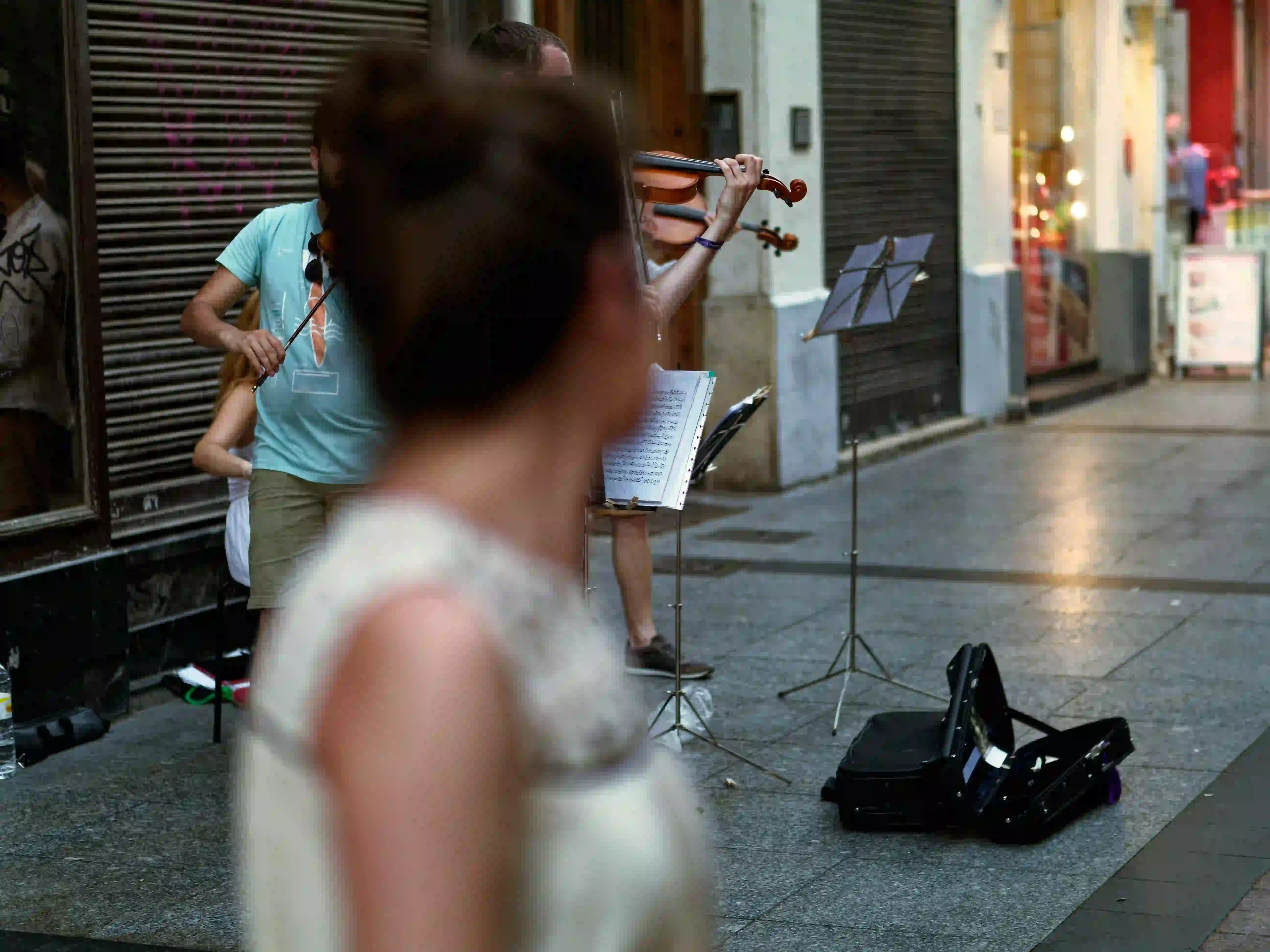
I was walking through the Marais in Paris a couple of summers ago, minding my business, when I heard a violin. Not the thin, scratchy kind you sometimes hear near tourist traps — this was something else. I stopped without meaning to. So did about forty other people.
By the end of the piece, a full circle had formed. The violinist played three more songs, did a little theatrical bow, and passed his case around. About half the circle gave something. The other half started walking away.
I have thought about that scene since. Who was “supposed” to give? Was a single coin okay? What about the family with three kids who had been there for the whole thing? Nobody explained the rules. Nobody ever does.
So here they are.
The short answer
For most street performers in Western Europe, €1 to €2 per person is the baseline for a few minutes of entertainment. For a full act — a circle show, a long set, something that genuinely stopped you in your tracks — €5 per adult is what most people who know the scene consider fair.
If you just glanced at someone from across the street and kept walking, you owe nothing. If you stayed, pulled out your phone, filmed a video, and clapped at the end — giving nothing would be rude.
Watching for a minute versus staying for the full show
The key question is not how much you liked it, but how long you engaged with it.
Passing musicians — violinists, accordion players, guitarists in a metro corridor — generally play in a fixed spot and are used to passing traffic. A few coins as you walk by is fine. Stopping to listen for three minutes, then leaving without giving anything, is a grey area. Staying for ten minutes is not.
Circle shows — acrobats, comedians, magicians — work differently. They build up a crowd deliberately, do a long free performance, and then ask for tips at the end. This is the explicit deal: they entertain you for free, you pay what you think it was worth. Most people in a circle show audience understand this. Give at the end, before the crowd disperses.
Living statues and interactive performers — those who pose, react, or engage with individual tourists — generally expect something when you stop to interact with them or take a photo. €1 to €2 per photo is common.
Musicians, circle shows and living statues: the amounts
| Type of performance | Passing glance | Short stop (2–5 min) | Long stay / full show |
|---|---|---|---|
| Busker / musician | Nothing needed | €1–2 | €2–5 |
| Circle show (acrobat, comedian) | Nothing needed | Stay for the show | €5 per adult |
| Living statue / interactive | Nothing needed if you do not interact | €1–2 if you stop and watch | €2–5 if you take photos |
These are norms, not rules. Give more if it genuinely moved you. A busker who played the song your parents danced to at their wedding deserves more than a euro.
The photo and video rule
This is the one that catches people most often. The logic is simple: if you point a camera at a performer, you are getting something of lasting value. A video on your phone that you will watch again, maybe share with friends. That is worth more than a passive watch.
If you film a street performer — especially a complete act — tip as if you stayed for the full show. If you ask them to pose for a photo, give something. Not because you have to, but because you have just made the interaction transactional, and the artist knows it.
No cash? Here is what you can do
Most street performers still rely heavily on coins and notes. But a growing number — especially younger artists and those in high-tourist areas — now accept digital tips. The shift away from cash has pushed many performers to adapt by adding payment links and QR codes to their setup. Look for a QR code on their instrument case, their hat, or a small sign nearby.
If you see nothing, you can ask. Most artists would rather know you wanted to tip and had no cash than assume you did not care. Some will have a payment link, some will not — but the gesture counts.
If you regularly find yourself without cash on city trips, consider keeping a few coins specifically for street artists. It is a habit that costs almost nothing and means you can engage with the people who make city streets actually interesting without the silent awkwardness of walking away. Some tour guides and performers now accept tips entirely without cash, which makes it easier than ever to give even when your wallet is empty.
Other ways to support a street artist
Tips are the most immediate form of support, but they are not the only one.
Follow them on social media. Many performers use Instagram or TikTok to book private events, build an audience, and find new opportunities. A follow costs nothing.
Share the video you filmed. If a performance genuinely impressed you, post it. Tag the performer if you can. A video that reaches even a few thousand people can meaningfully change an artist’s career. I have seen it happen.
Leave a review. Some performers have Google profiles or Tripadvisor pages. A positive review helps them get visibility and sometimes book corporate or private events that pay much more than street tips. Performers who rely entirely on tips can lose a meaningful share of their income when audiences have no way to pay — which is why visibility through reviews also helps them diversify.
Come back. The best regular street performers build an audience over time. If you are in a city for a week and you walk past a musician you enjoy every morning, giving something each time — even just a coin — adds up and genuinely matters to them.
The core principle is simple: the street is their workplace, and the performance is their work. You would not walk out of a café without paying. Engaging with a street performer — really engaging, not just glancing — is a version of the same transaction. A fair one, on both sides.
Frequently asked questions
How much should you give a street performer?
For a musician or solo performer, €1 to €2 per person is common for a few minutes of entertainment. If you stayed and watched a full circle show or an elaborate act, €5 is a fair amount per adult. Give more if they clearly moved or surprised you.
Is it rude to watch a street performer without giving anything?
Stopping to watch a passing musician for thirty seconds without paying is generally fine. But if you stayed, especially if you enjoyed the whole performance or took photos, giving something is the expected thing to do.
Can I tip a street performer by card or phone?
Some performers now accept digital tips via QR code or payment links. If you have no cash, look for a sign or ask them — most will appreciate the gesture regardless.
Should I tip before or after the performance?
For circle shows and planned performances, tip at the end after you have seen the act. For buskers playing in a fixed spot, you can drop something in the hat as you pass, even mid-performance.
Do street performers have to pay to perform?
In many cities, yes. Permits, pitch fees or audition systems exist in places like Paris, London and Barcelona. The hat often covers not just their income, but also the cost of performing legally.